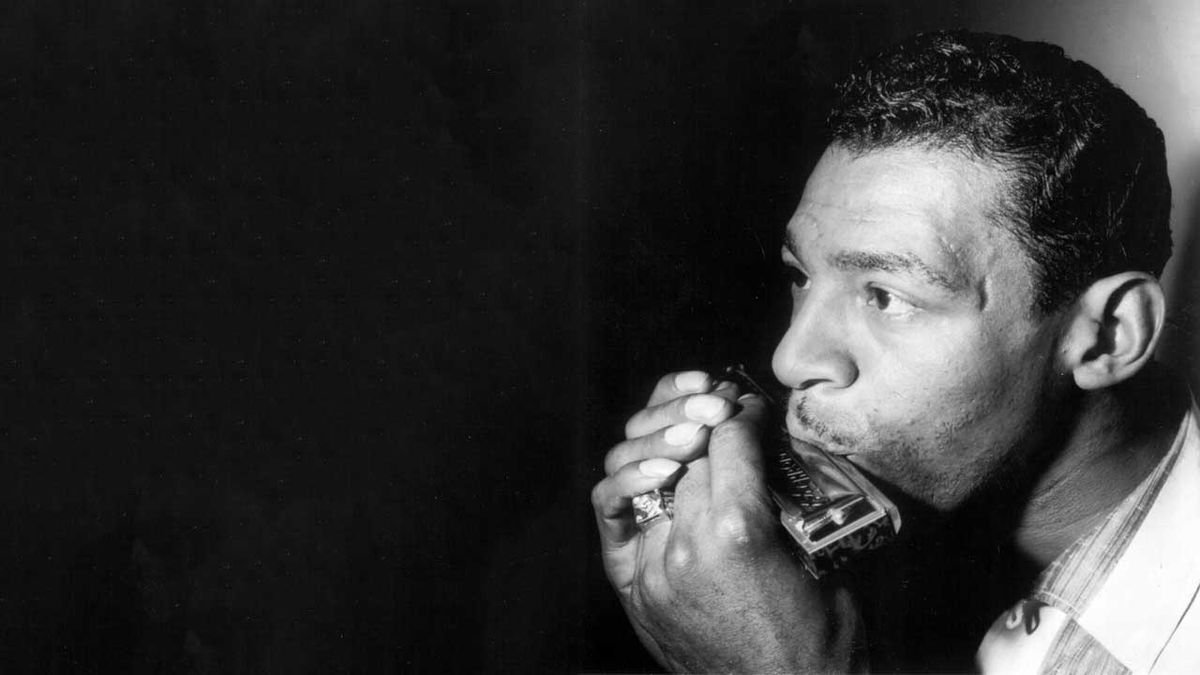
No person know when the harmonica first were given the blues, however WC To hand reported listening to teach imitations being performed at the tool within the 1870s, and through the Twenties, after Mamie Smith hit with Loopy Blues, it had turn out to be an integral a part of the soundtrack to the south of the USA.
Come the past due 40s and early 50s, with the appearance of amplification and hand held mics, the blues harp discovered its voice, with practitioners Little Walter Jacobs, Giant Walter Horton, Sonny Boy Williamson II and Snooky Pryor taking it into new geographical regions with wailing solos as expressive as any guitar riff or lick.
Prior to these 50s game-changers have been George “Bullet” Williams, Alfred Lewis, Jaybird Coleman and Noah Lewis, main avid gamers within the tool’s evolution. Their paintings is anthologised on Blowing The Blues: A Historical past Of Blues Harmonica 1926-2002 (Indigo), which gives an exhilarating advent to blues harp gambling. Right here we get essential development blocks corresponding to Williams’ Contact Me Gentle Mama from 1928 on Paramount, Mississippi Swamp Moan through Alfred Lewis on Okeh from 1930 and Coleman’s Guy Hassle Blues from 1930 on Columbia.
Bridging those pre-war recordings with the post-war harmonica blues sound we recognise nowadays is the paintings of Madison County, Tennessee’s John Lee ‘Sonny Boy’ Williamson, ‘the daddy of recent blues harp’. His evergreen songbook – together with Just right Morning Schoolgirl, Sugar Mama Blues, Shake The Boogie, Early In The Morning and Hoodoo Hoodoo aka Hoodoo Guy Blues – blueprinted the long run.
His have an effect on used to be massive, influencing Billy Boy Arnold, Sonny Terry, Little Walter and Sonny Boy Williamson II – the latter no longer handiest tailored his taste of gambling but additionally took on his title after he used to be murdered in a theft in 1948. The Authentic Sonny Boy Williamson Quantity 1 (JSP) is the most productive evaluate of his subject material.
Nevertheless it used to be Little Walter who took up Williamson’s baton, striking the blues harp in a gritty R&B atmosphere and ushering within the new technology. Each and every participant since, from Charlie Musselwhite to Paul Lamb, owes him a debt.

Little Walter – His Highest (Chess fiftieth Anniversary Assortment)
Born Marion Walter Jacobs in 1930, Little Walter began gambling blues harp elderly 8 and at 12 left his Marksville, Louisiana house to busk in New Orleans, Memphis, Helena, Arkansas and St Louis prior to settling in Chicago, the place he teamed with the Muddy Waters Band in 1948.
A real pioneer, he used to be one of the most first to enlarge his harmonica, and he used to be arguably the primary to make use of the added quantity for experimentation and distortion, which he utilised to complete impact on each his recordings with Waters (his first amplified look is on Waters’ Nation Boy from 1952) and his solo paintings.
His 1952 debut 45 for Chess imprint Checker, Juke – a gutsy R&B instrumental – used to be recorded in a single take and hit the USA R&B No.1 spot, closing there for 8 weeks – it’s nonetheless the one instrumental to put on the best of the USA R&B chart – and it set Walter as much as turn out to be one of the most Chess label’s maximum business propositions.
His 2nd 45, Unhappy Hours, hit No.2 whilst Juke used to be nonetheless at No.1 and he notched up an extra 13 US R&B hits, together with the superb My Babe – his 2nd and ultimate No.1 – in 1955, the similar 12 months’s Curler Coaster which, written through and that includes Bo Diddley, made No.6 and Key To The Freeway, his ultimate Most sensible 10 hit in 1958.
His Highest (Chess fiftieth Anniversary Assortment) is an actual cut price, rounds up 12 of the ones hits, and the rest 9 tracks are similarly exciting A and B-sides that come what may flopped however are all absolute best examples of his swinging taste and are actually rightly regarded as classics: Mellow Down Simple and Confessin’ The Blues are two of them.
Sonny Boy Williamson – Down And Out Blues
A risky character who used to be additionally an indelible songwriting skill, Aleck ‘Rice’ Miller punted his grizzly blues harp gambling and growly vocal underneath the title of an already a success recording artist, Sonny Boy Williamson. He equipped probably the most thrilling blues harp-led assets. His debut, 1959’s Down And Out Blues, collects his 45s as much as that date and with backing through Muddy Waters, Jimmy Rogers, Otis Spann, Willie Dixon and Fred Under, it’s a landmark paintings.
Junior Wells – Hoodoo Guy Blues
The temporary for Wells’ 1965 debut for Delmark used to be easy: seize his reside Chicago membership sound within the studio. With the Junior Wells’ Chicago Blues Band – that includes Pal Man, credited as Pleasant Chap at the album sleeve – and produced through Delmark founder Bob Koester, Hoodoo Guy Blues does simply that, with the album shot via with an urgency this is totally exciting. An enormous business luck, it turned into Delmark’s greatest supplier and remained so till 2003.
Giant Walter Horton With Carey Bell – Giant Walter Horton With Carey Bell
Horton and Bell had a telepathy, captured very best in this 1972 album. Recorded in Sound Studios in Chicago, it unearths the harmonica-playing pair in absolute best cohesion over 11 songs, seven penned through Horton, the remaining together with compelling readings of Little Walter’s Can’t Grasp Out A lot Longer and Robert Lockwood Jr’s Little Boy Blue. It actually is the approaching in combination of generations.
More than a few – Harp Blues
Spanning 1947 to 1968, this advent to post-war harmonica blues can’t be beat. The choice is unimpeachable, a snapshot of artists studying like a roll name of luminaries: Sonny Boy Williamson, Jerry McCain, Little Walter, Shakey Horton, The Junior Wells Chicago Blues Band et al. Additionally take a look at Deep Harmonica Blues from Ace Information, which catalogues the harp avid gamers who recorded for Excello – Sonny Boy Williamson and Jerry McCain, plus selection choices from Lazy Lester, Narrow Harpo and Jimmy Anderson.
The Paul Butterfield Blues Band – The Paul Butterfield Blues Band
The 1965 debut through The Paul Butterfield Blues Band is the instant the blues harp enters the USA blues-rock vernacular. Butterfield’s passionate blowing and bending solos provides an authenticity to their fashionable studying of Chicago blues as they ship a chain of well-crafted originals and stamp their imprint on covers of Little Walter, Junior Parker, Elmore James and Muddy Waters songs.

Watch On