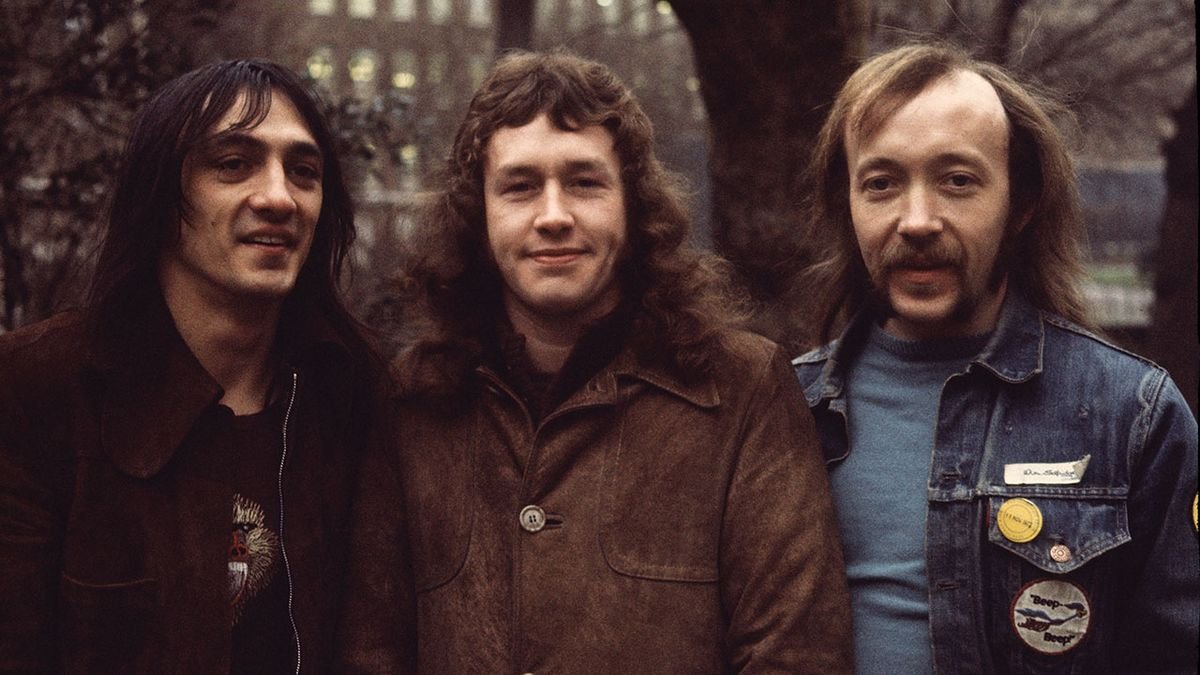
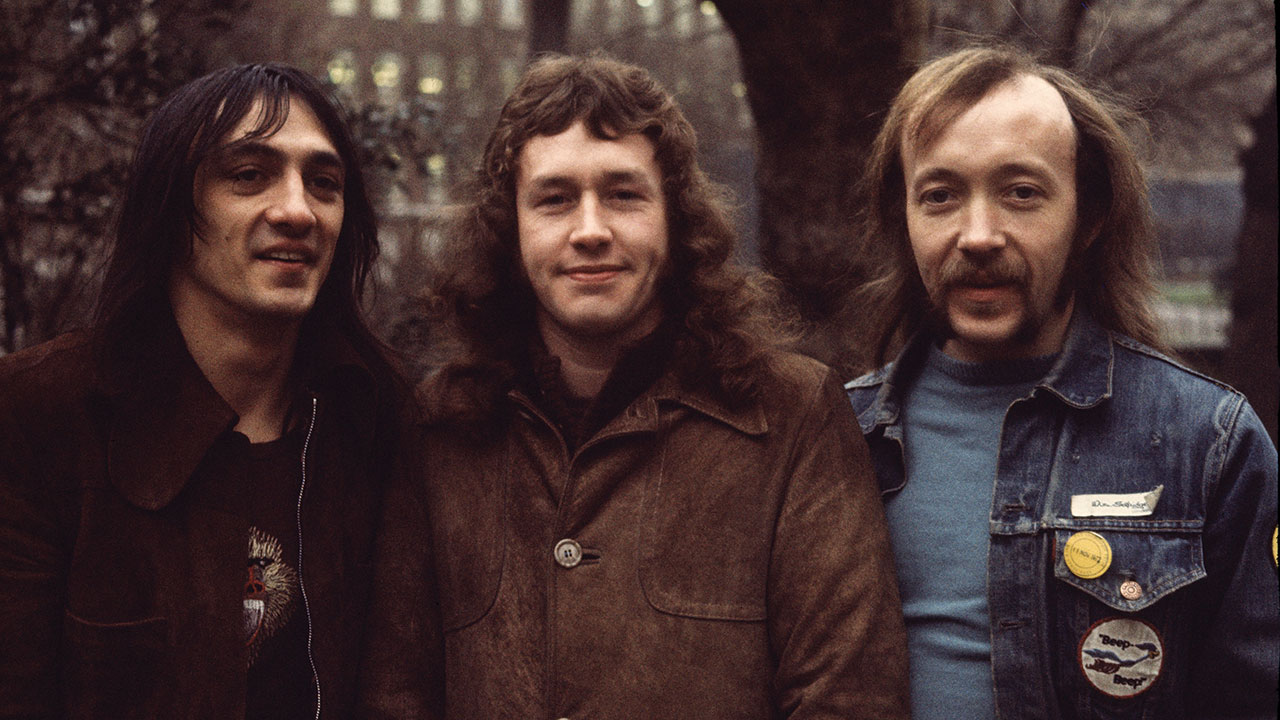
They helped to spearhead the British blues increase earlier than taking a change into rock’s left-field for a quartet of vintage albums. They strengthened their sound with Mellotron and synth. They even recruited the drummer from Egg. In 2020 Prog requested the past due Tony McPhee: how prog had been The Groundhogs?
Shaped in 1963, and a part of the primary wave of the British blues increase, the Groundhogs first of all got here to public consideration as John Lee Hooker’s backing band when the veteran bluesman paid a talk over with to the United Kingdom in 1964. Extra gigs adopted with Jimmy Reed and Champion Jack Dupree, and in 1968 they had been signed to Liberty Data by way of long run Wombles supremo Mike Batt. On the other hand, it wasn’t lengthy earlier than the band had been embracing the brand new revolutionary aesthetic with their 1969 album, Blues Obituary, proclaiming in no unsure phrases a transfer clear of blues purism against a extra experimental route.
The Groundhogs are a vintage instance of a band who included revolutionary parts into their tune whilst protecting their core sound; a procedure that was once rife within the early Seventies. Bring to mind arduous rock’s large 3 on the time – Led Zeppelin, Deep Pink and Black Sabbath – after which believe Stairway To Heaven, Kid In Time and Wheels Of Confusion.
However underneath the management of singer and guitarist Tony McPhee, the Groundhogs driven out additional than maximum. Specifically, the 4 albums they recorded between 1970 and 1972 – Thank Christ For The Bomb, Cut up, Who Will Save The Global? and Hogwash – noticed them turning into an increasing number of formidable, each compositionally and conceptually, with the deployment of Mellotron and synth serving to to create a thrilling revolutionary/blues rock hybrid.
Having a look again, McPhee isn’t solely certain how the revolutionary affect seeped in: “As a jobbing musician, there was once little time to practice others,” he says. ”We had been gigging repeatedly, so if it wasn’t at the automotive radio, we infrequently were given to listen to it.” However he was once decided to transport the Groundhogs ahead: “I’ve at all times appreciated getting in new instructions clear of ‘the gang’ – the blues may also be proscribing to an extent, and I sought after to discover.”
Working as an influence trio of McPhee, bassist Pete Cruickshank and drummer Ken Pustelnik, the band had been decided to make a observation with their 1970 album. “The name got here from a dialogue with Roy Fisher, Groundhogs’ supervisor on the time. John Lennon had mentioned that The Beatles had been larger than Jesus and were given numerous exposure, so we had been making an attempt to think about one thing that was once as contentious as that. Roy mentioned, ‘Thank Christ for the bomb,’ and all of it clicked in my head.”
McPhee set about writing a suite of songs filled with contrasting riffs and chords – nonetheless recognisably blues rock, however skewed into dynamic new shapes. The lyrics had been additionally a big advance from conventional rock’n’roll platitudes; the primary aspect of the album is primarily based across the theme of alienation, whilst the second one tells the tale of a wealthy guy who renounces his standing and embraces poverty as a substitute.
Soldier deftly portrays the brutalising results of conflict, set to an irresistibly catchy riff: “We actually were given our spice up when John Peel performed Soldier on his programme, he appreciated the track and the lyrical complexity.”
Thank Christ For The Bomb were given to No.9 in the United Kingdom charts, and considerably raised the Groundhogs’ profile. They began taking part in along most of the technology’s rising prog bands, together with Sure, Curved Air, Delicate Massive and Colosseum – despite the fact that McPhee admits: “I wasn’t enamoured by way of one of the most bands within the revolutionary scene at the moment. I didn’t just like the comfortable, fluffy sound that they produced.” As a substitute, he drew inspiration from the darker, edgier sounds of teams reminiscent of King Red.
The Groundhogs had been one of the vital coterie of underground bands at the Liberty/United Artists roster, which integrated Hawkwind, Guy, Can and Amon Düül II. McPhee recollects an incident at a pageant in Hamburg: “We opened the van and far to our wonder, it was once full of a load of Orange tools, which wasn’t ours. The document corporate had purchased it for Amon Düül II as a result of VAT was once inexpensive in the United Kingdom than in Germany.
”They got here and whisked it away; but if they performed, they overran their time slot such a lot that the Groundhogs didn’t get to play. Now not most effective had we unknowingly acted as a loose taxi for his or her tools, however we’d pushed the entire technique to Hamburg with out taking part in the gig!”
A large number of lovers and the clicking didn’t find it irresistible… I agreed with them for some time
The primary aspect, and four-part name monitor, in their 1971 album Cut up was once every other conceptual piece, this time excited by psychological breakdown and schizophrenia. The lyrics had been in response to a daunting enjoy McPhee himself had lived thru. Having prior to now smoked hashish to no sick impact, he remembers courteously accepting a joint: “It was once the beginning of a nightmare.
“I suffered what I now name my ‘aberration.’ The day were sizzling and I’d were given burnt within the park – a mixture of heatstroke and hashish resulted in a month of terror and confusion. Writing about it almost certainly helped paintings my means thru it, despite the fact that I were given anxiousness flashbacks for a very long time afterwards. I by no means touched medication once more.”
Development on their reputation as an explosive reside act, and coming off the again of opening for the Rolling Stones on their 1971 UK excursion, Split was once the Groundhogs’ maximum a hit album, peaking at No.5 in the United Kingdom charts. Any other set of spiky, twisting songs, it comprises their maximum well known monitor, the punk blues stomp of Cherry Pink – from the place the document label takes its identify – which, in spite of now not being launched as a unmarried, even secured them a slot on Most sensible Of The Pops. However McPhee had upper aspirations in thoughts.
Who Will Save The Global? is the place their prog dispositions actually become obvious – simply pay attention to the jazzy riffs and dramatic Mellotron of Earth Is Now not Room Sufficient and Tune Is The Meals Of Concept. It’s every other loosely conceptual album, addressing the quite a lot of evils threatening the arena – overpopulation, conflict, large industry…
However its presentation was once anything else however po-faced, with DC and Wonder Comics’ artist Neal Adams introduced in to create a fold-down cartoon sleeve, with the band reimagined as superhero troup The Mighty Groundhogs. “I used to be a large fan of Silver Surfer, as drawn by way of Neal,” says McPhee. “When I noticed the art work he’d get a hold of, I sought after to put in writing the entire songs to hyperlink with it.”
In spite of attending to No.8 in the United Kingdom charts, it were given a decidedly frosty reception in comparison to their earlier albums. “A large number of lovers and the clicking didn’t find it irresistible. To be truthful, it was once rushed – I by no means had the time to paintings at the manufacturing and even take into accounts what we had been taking part in, and I agreed with them for some time.
”It was once only some years later, once I may just pay attention to it objectively, that I realised its strengths. Now we steadily get other folks announcing it’s their favorite album.”
He persevered to take the band in a extra revolutionary route, including an ARP 2600 synthesiser to their musical armoury. And following the departure of Pustelnik, the band’s new drummer was once none instead of Clive Brooks from Canterbury scene stalwarts Egg, who had supported the Groundhogs on excursion.
“Clive was once a phenomenal guy and there was once so much much less rigidity concerned with getting in combination on time, taking part in and traveling,” says McPhee. “He was once a formidable participant who suited the days and the brand new subject matter I used to be writing.”
That subject matter would emerge at the good Hogwash, the band’s maximum brazenly revolutionary album. Now not most effective are Mellotron and synth extra to the fore than ever – specifically on You Had A Lesson and Earth Shanty – however the artful preparations and segues between songs make for a in actuality subtle and robust listening enjoy.
McPhee’s lyrics also are a few of his maximum difficult. For example, opener I Love Pass over Ogyny is a chilling depiction of home abuse from the perspective of the abuser, the track’s stop-start dynamic reflecting its dysfunctional theme.
There are nonetheless numerous smug individuals who get a kick out of cruelty
Alas, the general public weren’t receptive to McPhee’s an increasing number of outré tackle blues rock, and Hogwash didn’t chart. It additionally proved to be their remaining album for United Artists, with the band signing to WWA, the short-lived label arrange by way of Black Sabbath’s control crew. They launched the album Forged in 1974 – which, because the identify suggests, was once a retreat from the extra expansive sound of Hogwash – earlier than splitting up for the primary time the next yr.
Sooner than that had come the apogee of McPhee’s experimental impulses, with the 1973 free up of his first solo album, The Two Aspects Of Tony (T.S.) McPhee. On one aspect was once a selection of folks blues numbers, and at the different an avant-garde digital symphony entitled The Hunt, carried out at the ARP 2600 and a Rhythm Ace drum gadget, which nonetheless sounds totally in the market nowadays.
“I’d been the usage of the ARP 2600 throughout gigs for the Hogwash excursion and sought after to discover its possible,” he remembers. ”It additionally gave me a chance to precise my loathing for individuals who hunt foxes. I stand by way of what I mentioned then – there are nonetheless numerous smug individuals who get a kick out of cruelty.”
The Groundhogs could have existed at the outer edge of the prog international, however the way in which the style knowledgeable their tune within the early 70s is an engaging instance of cultural cross-fertilisation.
And whilst they by no means fairly made it into rock’s premier league, they launched one of the most technology’s maximum cutting edge and thrilling albums – and so they retain a loyal fanbase to at the present time, with their better-known admirers together with Captain Good, Julian Cope, Pavement’s Stephen Malkmus, QOTSA’s Josh Homme and Underworld’s Karl Hyde.
Fireplace Data are protecting the band’s legacy alive with an ongoing reissue programme in their vintage Liberty/UA albums, in complete session with McPhee. Hopefully, a brand new technology of lovers would possibly uncover some of the unique bands that Britain has ever produced. As he humbly concludes: “It’s satisfying to assume that folks regard the tune as nonetheless being related.”