Stationed on an island 40 miles south of the Faroe Islands’ major landmass, Streymoy, the tiny, shore-clinging hamlet of Sandvik is house to 2 monuments to seafaring peril. Status over the slate-rock western bay is a wide stone move in honour of tenth Century Christian Viking leader Sigmundur Brestisson, who swam from a far off shipwreck to shore, best to be instantly beheaded by means of a neighborhood for his gold armband.
5 hundred yards down the street, lost sight of by means of a frightening, grey-green wall of mountain jutting out right into a wind-whipped aquamarine fjord, is a fenced-off headstone, erected in honour of 14 sailors who misplaced their lives on their go back from a whaling expedition in 1915.
At the black sands the place the villagers witnessed their family members being overtaken by means of the waves, Hamferð keyboardist Esmar Joensen is recounting the horrors of the latter crisis and the reverberations that persist greater than a century later. It’s the topic of his band’s newest album, Males Guðs Hond Er Sterk (‘However God’s Hand Is Robust’).
“Of the 2 ships that went down,” he explains, “just one sailor survived. He used to be pulled out of the ocean on a rope, they usually discovered the physique of his son ensnared on the finish of it. Whole bloodlines have been burnt up, however his daughter’s nonetheless alive. She’s 93, and he or she nonetheless lives simply up the street from right here.”
The son of native sheep farmers, Esmar is aggregate of bookishness and durable internal stillness as he recounts the tale with the gravity of a private witness. Rising up right here in Sandvik, he used to be all the time attracted to this spot, staring out around the sea and questioning how its elemental, capricious nature may well be translated into sound. The solution became out to be Hamferð themselves, one of the crucial transformative bands to have emerged from the steel underground in contemporary reminiscence.
Watch On
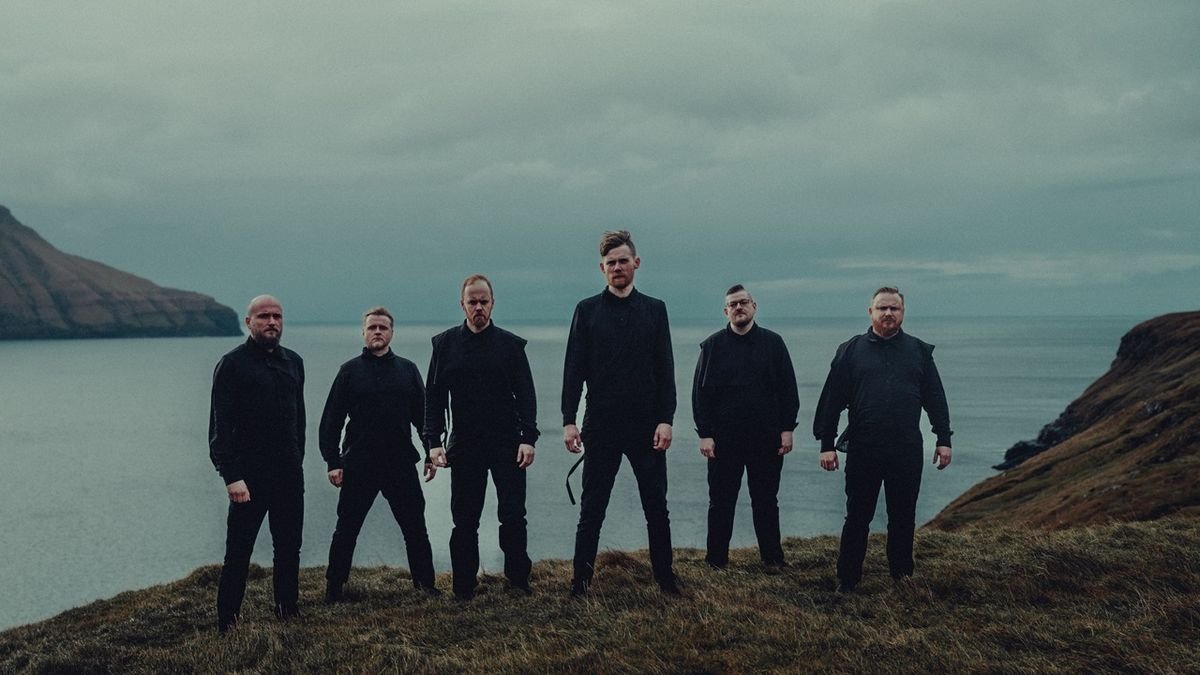
Hamferð – pronounced Hamferth with the softest of ‘th’s, the identify a folkloric be aware for the ghosts of family members misplaced at sea – have been shaped in 2008, amidst a tiny native steel scene the place best Viking/folks metallers Týr have been gaining global consideration or exploring indigenous issues. To start with impressed by means of My Demise Bride, and habitually bedecked in Faroese funeral fits, they’ve controlled to transmute the quite area of interest nation-states of death- and funeral doom into the type of oh-my-god-have-you-heard-this, word-of-mouth revel in that transcends style trappings.
That’s in no small section all the way down to frontman Jón Aldará’s astonishing vocals, starting from deep growl to heartrending tenor as although he’s been bothered by means of divine ordinance to present voice to humankind’s existential plight. The video for the band’s beautiful 2015 observe, Deyðir Varðar, featured them upon a Faroese mountaintop all over a sun eclipse. It used to be a second of impressive, soul’s-journey synergy that’s garnered 500K YouTube perspectives and reams of awed testimony regularly equating it to a spiritual revel in.
Throughout a longer debut EP, Vilst Er Síðsta Fet, and two albums, Hamferð have develop into to the Faroe Islands what soon-to-be-tour-mates Sólstafir have develop into to their local Iceland, giving voice to each far flung, alien landscapes and deep, emotional contours for which essentially the most core-shaking of responses is one in every of reputation.
Jón and Esmar are sitting within the keyboardist’s lounge, in one of the most gaily painted, rigidly geometric structures preserving fortress in opposition to the weather alongside Sandvik’s coast and the expanses past. For them, their setting have all the time been deeply embedded in Hamferð’s tune.
“From the primary track we ever wrote as a band, for Vilst…, we had the part of fighting the forces of nature,” says Jón, a biologist and avian conservationist in his day process whose considerate, laidback nature is a a ways cry from his wrought making a song personality. “It used to be from the point of view of a person at sea pronouncing farewell to the sector as a typhoon takes his boat.”
Moderately than simply mine such eventualities for melodramatic doable, Hamferð’s method has all the time been to discover a path to each the essence of Faroese tradition – the melancholia, and the battle to live on among antagonistic environments – and the moments that outline every people, in our most crucial states.
“It’s very private factor for me,” says Jón, “however in a environment that I believe is uniquely Faroese. It’s the sort of small group right here that loss of life is all the time very shut, as shut as pleasure in lifestyles, and a majority of these are very distinguished, since you’re principally getting what you’ll be able to out of the land and out of the ocean.”
Marooned in the midst of a 920-mile stretch of the North Atlantic ocean between the coasts of Norway and Iceland, the Faroes is a land of contrasts. In transparent climate, the snowdusted mountains alongside the winding Faroe highways give approach to surprising perspectives of huge, islet-dotted ocean expanses. It sounds as if so primordial but hyperreal you must persuade your self they in fact exist.
On Streymoy’s south coast, the stays of an historical stone church fail to remember a gray, stormchurned sea because it’s whipped by means of 90˚ rain. It’s a panorama that may really feel detached to the humanity that persists by itself, interior scale. Giving voice to that scale, Hamferð’s first two albums, 2013’s Evst and 2018’s Támsins Likam, finished a story arc, pulling the point of view again to inspect the lifetime of the fictitious doomed sailor: the regrets and alternatives made, the squandering of his protecting position as son, husband and father, all summed up in essentially the most crushing and cathartic of coming to phrases.
“We needed to inform that tale sooner than lets write this album,” says Esmar. “The tragedy on the center of this one used to be enforced by means of such a lot of angles – the warnings the sailors got and so forth, and it’s so tough that used to be a horrifying matter to take on. We needed to in finding our manner thru it and determine how this is able to have an effect on folks and what the revel in can be in that maelstrom of insanity. It used to be essential to method it respectfully moderately than exploitatively.”
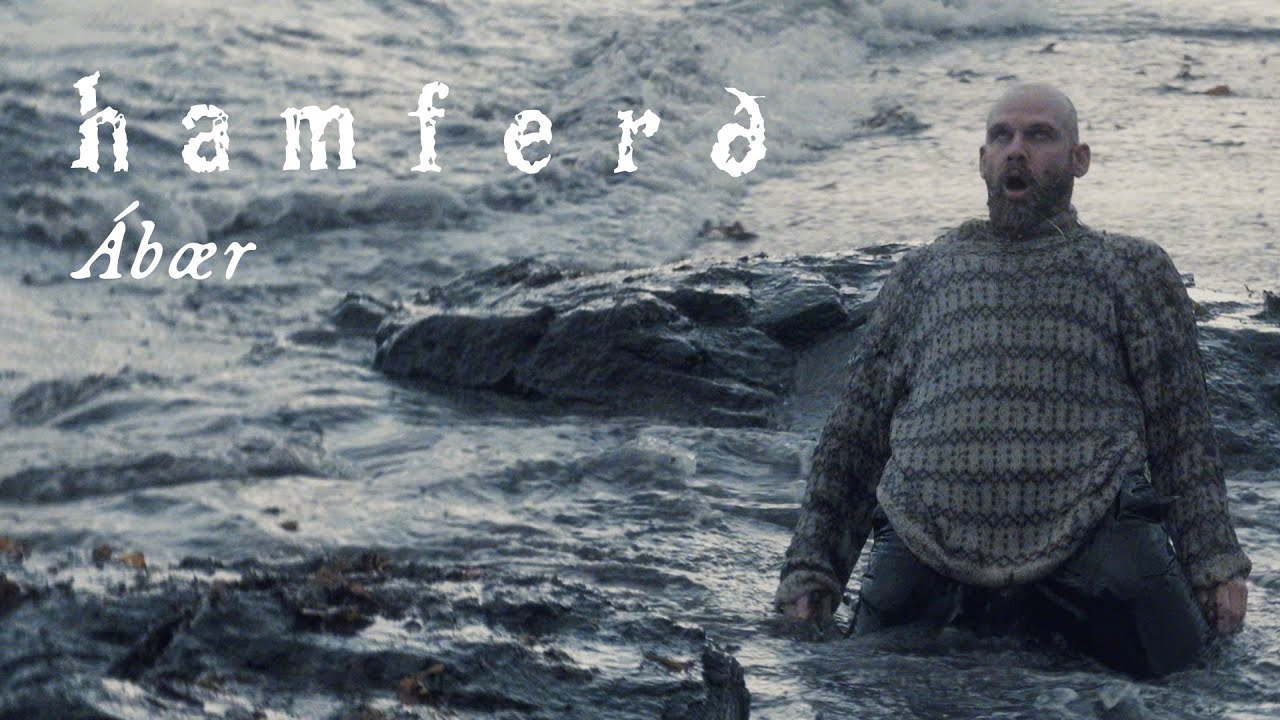
It’s Hamferð’s willingness to totally make investments themselves within the emotional travel in their characters that makes Males Guðs… such an awesome but relatable revel in. Ábær’s Gojira-esque judders and chest-baring crests, the consolatory heat infusing Glæman, and Hvølja’s prolonged, fall-of-Krypton subdrops are awash with dramatic grandeur. All of it ends up in the coda of the identify observe, that includes the haunting testomony of the only survivor, which resurfaced in a radio documentary to commemorate the tragedy’s centenary. His daughter granted permission for reuse at the album.
“She used to be truly satisfied that anyone sought after to make use of that recording,” says Esmar. “It made her truly proud and humbled simply to listen to her father’s voice once more. It used to be essential for us to even be capable to method his daughter such a lot of years afterwards and get that blessing.”
That the recording is in Faroese is not any bar to its have an effect on, each the defiance and the weariness permeating his voice giving a way of hardship that resonates past cultural borders. For Hamferð, Jón’s personal choice to sing in his first language used to be by no means unsure.
“Since we’re coming from this concept of writing Faroese doom steel, it suits really well to our basic manner and our social tradition, so it’s truly your best option to me. And while you’re making a song in a language that no longer many other folks talk, it’s a truly excellent check for audiences. Like if individuals are getting truly emotional to it, you understand you’ve performed your process. It’s nearly laborious to witness when individuals are reacting so powerfully to what we’re doing in some way that’s past what we ever imagined.”
“Hamferð almost definitely has extra crying than moshing,” provides Esmar. There may be an elephant within the room with reference to the brand new album. Or, extra exactly, a whale. It hinges at the millennia-old Faroese apply of using dolphins and pilot whales to shore in an effort to be butchered. Controversially, it’s a practice that continues to nowadays, one who’s resulted in the native G! Competition being continuously boycotted and participants of Týr being criticised for his or her involvement.
Hamferð had been continuously requested to denounce the slaughter. It raises the query of the way the band stability a way of Faroese identification with an consciousness of the outrage the apply reasons. “It’s one thing we’ve been confronted with sooner than, the place folks have criticised us for no longer status up in opposition to whaling,” says Jón.
“I will completely perceive intestine response of pondering that is barbaric, and from the Faroese point of view it’s a fancy topic. Is that this violence for violence’s sake or is it essential violence to obtain sources? We wish to be diligent about securing the least quantity of struggling for those animals and the least quantity of wear and tear on wild populations.”
“The whaling wasn’t performed for game, and it wasn’t even for industrial causes,” says Esmar. “We can have written the tale from the point of view of the whale as smartly, however the tale we needed to inform used to be from over 100 years in the past, and it’s a tale of the way determined folks have been. From their viewpoint, they have been risking their lives no longer out of malicious intent, however to get meals for his or her households, and a few of them died for it. It’s a historical past we couldn’t glance clear of, and this used to be an album we felt we needed to make.”
40-five miles north, the capital town Tórshavn’s Nationwide Museum hosts the 1942 portray Grindadráp by means of Sámal Joensen-Mikines, a bright, historic depiction of the apply of whaling. A kinetic rebellion of purple and black underneath a golden sky, contrasting with the resolution of the boatmen thrusting spears into the whales, it’s each a reputation of custom and a visceral horror display, its unyielding gaze a lurch into an international that, like whaling itself, is concurrently repellent, emotive and a jolt to our collective humanity up to any story of private human loss.

For the population of Tórshavn, Hamferð have develop into one thing of a countrywide treasure. Day after today they’re taking part in a release display for the brand new album in Sirkus Föroyar, a historically styled theatre, all wood panels, beams and high-sloped ceilings. The target market is extremely various, from younger children to 60-year-olds. Casually dressed folks combine with metalheads in Slayer hoodies and struggle patches.
“I pay attention to techno, so it’s possible you’ll marvel what I’m doing right here,” says one punter out of doors. “However I completely love this band, and I needed to come.”
The magic that homeland presentations can regularly invoke, in particular for bands making a song of their local tongue, is in complete, tangible impact, the satisfaction and anticipation attaining important mass because the lighting decrease and the bandmembers seem onstage. They won’t appear to be rock stars, however the asymmetrical, clothier fits they’re debuting this night carry as a lot taste because the gravitas in their former, formal apparel, and when Jón seems because the track Males Guðs Hond Er Sterk units the magnetically solemn tone, his greedy of the mic stand as though it have been a tiller and each and every inhabiting-the-moment gesture is an embodiment of the tune’s impassioned swell.
Regardless of how used you might be to the transitioning of growls to scrub vocals, there’s no getting ready for the chic surprise because the likes of Ábær and Í Hamferð pull out essentially the most chic, out-of-body of entreaties from each dense, natural churns and delicately glinting timbres. A last Harra Guð, Títt Dýra Navn Og Æra, a revamp of an previous Faroese psalm, with all of the crowd making a song alongside, is the type of true second of communion whose roots really feel infinitely extendable.
“Feelings are lovely epic,” say Jón, taking inventory the next day to come. “In case you materialise them into one thing that you simply relate to visually or bodily on this planet, then what higher imagery than earthquakes and landslides and storms and raging seas?”
For all of the tragedy wrapped up within the tale of Males Guðs…, Jón hopes there’s a much wider message to be discovered too. “The primary side for me used to be the facility to push thru even the darkest of reports to avoid wasting the remainder guy who clung on, the facility to peer the possibility of hope when all gave the impression misplaced. He noticed it as God’s paintings that one different boat survived, and for all of the loss and heartache, it used to be an come upon with the miraculous.”
It’s that sense of the inexplicable as an act of reckoning and private catharsis that Hamferð have all the time given upward push to – a travel thru our darkest nation-states that places the instant of liberation into sharpest aid.
Males Guðs Hond Er Sterk is out now by means of Steel Blade. Hamferð excursion with Solstafir and Oranssi Pazuzu from November 13 – November 24.