It’s Would possibly 1968 and a turbulent age, with the life-changing political occasions of part a century nonetheless unfolding. Riots and revolution circle this 3rd stone from the solar as battle, terrorism and civil rights angst boil over. In the United States, black activist Martin Luther King has been assassinated; the country’s democracy will take some other blow when in style senator Robert F. Kennedy follows him.
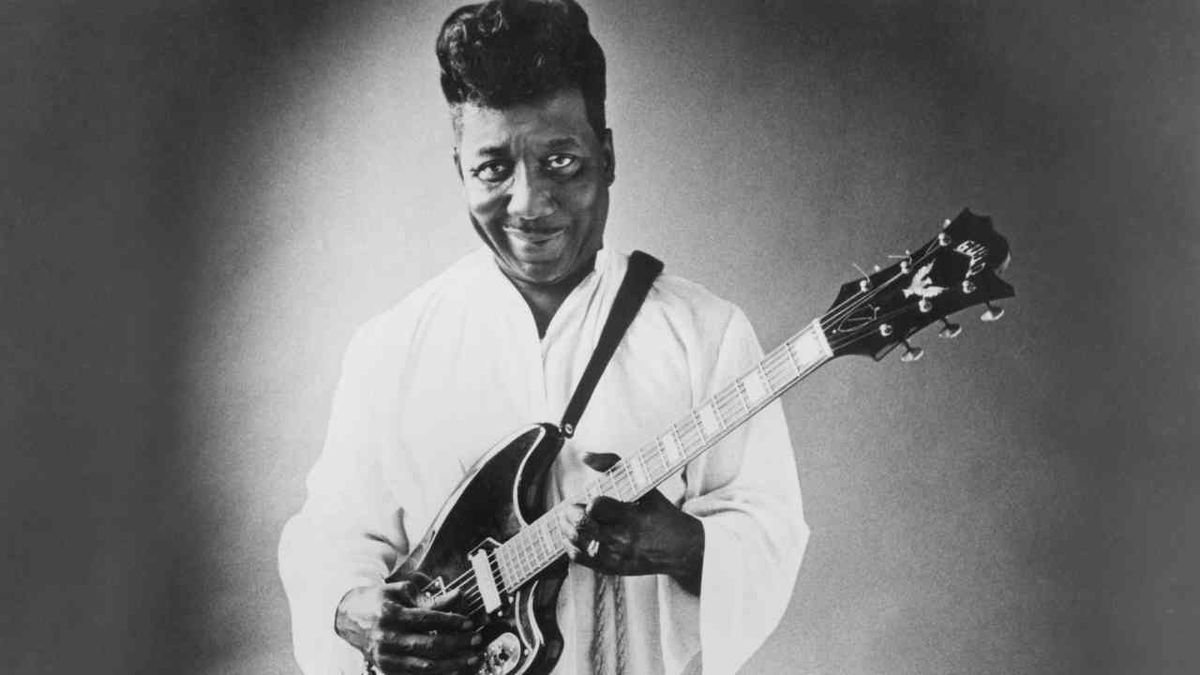
Within the Ter-Mar Studio at 2120 South Michigan Road, Chicago, a hand-picked workforce of hip younger musicians from the interracial, avant-garde rock collective Rotary Connection are halfway thru a three-week recording consultation, working thru a contorted electrical groove known as Tom Cat. The sound is a prowling, prickly, funk-blues shuffle with wild tenor sax and mewling acid guitar licks laced during. In the back of glass, on the blending table, is the younger guy using the speculation ahead, 26-year-old Marshall Chess, with ingenious arranger Charles Stepney at his aspect. On the centre of the ululating jam is Chess data’ fading folks hero and grasp of the blues, Muddy Waters. A 12 months later, and in gentle of the hurricane that may observe those periods, Waters will rant to the clicking: “Each time I am going into Chess they put some un-blues avid gamers with me… and when you alternate my sound, then you definitely gonna alternate the entire guy.” However for now, Waters turns out greater than content material, raucously throwing his lot in with the rag-tag unit this is about to tip electrical blues – and its local identification – on its head.
However the tale begins within the Thirties, with Marshall’s forefathers, the Jewish Cycz circle of relatives arriving in Chicago from a poverty-stricken Poland at the cusp of WWII. The Windy Town is a the city of business and alternative – just about the Cycz’s entire village has relocated right here, along a limiteless black neighborhood travelling north to the wealthy hub, the entire means from the destitution of Mississippi and Memphis by the use of the Rock Island Line.
Hastily, the circle of relatives surname is Americanised to Chess, and two younger brothers Lejzor and Fizsel develop into Leonard and Philip. Their father units a couple of scrap steel industry; the mixing into their new neighbourhood is whole.
It’s a cheerful house, with Mother and sister Malka too, and the vigorous brothers are incessantly distracted via the points of interest and sounds in their new setting and its darker-skinned denizens, in particular the native gospel church with its stomping, hand-clapping, tambourine-and-piano theatre. In consequence Leonard and Phil incessantly get the strap from Pop for lacking dinner. However quickly the time comes for boys to develop into males, and for males to make some greenbacks.

“My father was once into earning money,” Marshall Chess displays these days from his LA house. “He got here from a deficient peasant village and not using a rest room or electrical energy. He noticed his first rest room once they were given off the boat at Southampton, England! So the Cyczs, in conjunction with the hundreds of thousands of black other folks, got here to Chicago for one reason why simplest. To make a residing, purchase a area, purchase a automobile.”
Leonard’s early endeavours incorporated “shoe salesman, milkman, and liquor retailer proprietor in an excessively unhealthy black neighbourhood the place the hire was once most cost-effective,” additionally running in his father’s scrap backyard, within the middle of some other black neighborhood. By way of the mid-Nineteen Forties, the song bug-bitten brothers had been proud house owners of the Macomba Living room membership, offering a rough-and-ready outlet for black performers when few venues would settle for their customized or ability.
Leonard now had a circle of relatives of his personal, however the brothers’ conviction for his or her ever-burgeoning companies left little time for anything. To the younger Marshall, all he sought after to do was once hang around together with his dad.
“At the start, Dad labored two jobs. Then the Macomba was once open all evening and he would come house at 5, six within the morning. He’d deliver the cash house from the membership, and I have in mind he’d all the time put on this large chrome gun, which he’d placed on best of the cupboard. I used to invite him, ‘Why do you’ve gotten a gun?’ He advised me, ‘As a result of after I take the cash out I need everybody to look it.’”
Increasing the publicity of black artists they had been rubbing shoulders with on this fertile atmosphere, the brothers shaped Chess Information within the early 50s, at a time when primary listing firms had been oblivious to – or scared of – selling the sounds of the Deep South and black American dance song.
First of all promoting data from the again of a Cadillac, and development as much as a self-contained multiplex of an workplace, studios, listing urgent plant and distribution warehouse all on South Michigan Road, Chess Information – and spin-offs Checker, Argo and Cadet – would put the Chicago song scene at the map as the United States pop charts quickly stuffed with the grit and groove of Muddy Waters, Howlin’ Wolf, Sonny Boy Williamson, Little Walter, Bo Diddley, Chuck Berry, Ramsey Lewis and Etta James.
Because the empire grew, Leonard would take Marshall fishing within the early mornings – “I feel he felt so responsible about running at all times” – after which, elderly ten, Marshall were given his first large street travel, right down to the Deep South to search for ability, simply him and his dad. “He was once a workaholic and I used to be the oldest, the one son. The one strategy to be round him was once to head the place he went.”
Sooner than lengthy, Marshall was once the use of his unfastened time to paintings on the Chess workplace. “My first activity was once getting espresso for everybody. Then I began packing packing containers for delivery data, sweeping, I realized the entire jobs from the bottom up. They handled me like a slave, you recognize (laughs). I’d cross there within the summers, I simply enjoyed striking round. I knew the entire artists, however they handled me just like the little child I used to be. Other people incessantly requested what had been they speaking to me about? Smartly, I used to be 12 or 13 and so they had been all the time simply asking me about intercourse, they had been curious, ’cos the blues singers coming from the Deep South, Mississippi, Kentucky and Arkansas, they had been having intercourse at ten years outdated. I favored it, you recognize, it wasn’t a listing corporate, it was once the circle of relatives industry, and the artists had been my pals.”
Flip the clock to 1967. Marshall has spent his existence exploring each and every nuance of working The us’s predominant jazz and blues black song label, and the days they’re a-changing. A shift in center of attention is had to fulfill the record-buying public, who’re veering clear of Chess and into Motown, flower-power pop and blue-eyed soul and rock. Marshall affirms, “I used to be indisputably a part of that entire psychedelic technology – I grew up on the finish of beatniks and the start of hippie. Now I sought after Chess Information to get into that white marketplace. In 1966 I satisfied my circle of relatives to let me get started my very own label, Cadet Idea.”
The circle of relatives had been proper via his aspect, and so they knew they may make cash too.
“My father and Uncle Phil had been in the back of me. By way of then I’d produced a large number of Chess’ output, I knew my means within the studio and my father all the time stated to me, ‘Do anything else you wish to have, don’t let other folks inform you, simply cross with what you imagine otherwise you’ll by no means do anything else particular’. Additionally I had the keys to the workplace and the studio, and in that generation we weren’t recording so much at evening.”
Cadet Idea was once to be a recent take at the Chess spec: a melting pot of recent rock influences with the emotion and soul in their signature sound. Marshall’s first recruits had been a tender arranger he’d been really useful, Charles Stepney, plus Chess vocalist Minnie Ripperton, area manufacturer and saxophonist Gene Barge and area songwriter Sidney Barnes. 3 individuals of rock band The Right kind Strangers had been poached – guitarist Bobby Simms, bassist Mitch Aliotta and drummer Ken Venegas. The general additions to the dream line-up had been guitarist Phil Upchurch and drummer Morris Jennings. Rotary Connection had been waiting to plug in.
The band temporarily began transforming Marshall’s favorite songs via artists like Cream, Dylan, the Stones and Hendrix in a soulful, celestial and symphonic means, however nonetheless with an acid-fuzz edge for the freaks.
It translated brilliantly on their self-titled debut of 1967, and Cadet Idea’s route gave the impression positive to faucet into the brand new pop awareness seamlessly.
Marshall had assembled the most productive trendy musician’s collective round, with the ability to reinvent well-loved requirements and ship thrilling new compositions. What if that band may breathe existence into the outdated Chess catalogue, and produce a brand new technology of song fans again to the blues?

Muddy Waters – Marshall’s buddy, and Chess Information’ primary staple for twenty years – will be the first experiment with Rotary’s backing, on an album titled Electrical Dust.
“The blues was once part of me, I’d heard it my entire existence,” Marshall explains. “Once I concept up Electrical Dust, it wasn’t to switch Muddy Waters’ sound. I approached it find it irresistible was once a idea of creating this sort of psychedelic blues album. It had by no means been executed sooner than, and that’s what my label was once all about. Muddy relied on me, so I stated, ‘I’ve this experiment, let’s do it’. It was once a one-time factor, you recognize? Like an actor in a movie.”
Muddy agreed to the speculation. The studio was once booked and one of the younger bloods from Rotary Connection – augmented via consultation aces Pete Cosey and Roland Faulkener on guitar and Louis Satterfield on bass – mixed with Waters and his boogie-woogie piano sideman Otis Spann. The track-listing was once drawn from Muddy’s best-known again catalogue, with numbers corresponding to Mannish Boy and I’m Your Hoochie Coochie Guy along two new songs and a canopy of the Rolling Stones’ Let’s Spend The Evening In combination, advised via Marshall, as Waters fanatics the Stones had coated I Can’t Be Happy a few years previous.
Marshall: “The band all were given alongside super and Muddy gave it his cross. Some issues had been tricky for him, simply because he wasn’t used to enjoying with a band that he wasn’t in regulate of. Having Otis Spann there helped so much as they had been so used to enjoying in combination. However we had been all greatly into it and that’s why it got here out super.” Marshall laughs: “Whether or not other folks favored it or now not, it’s a great-sounding listing.”
And when it hit listing store cabinets in October 1968, the consequences had been instant.
“The album took off like a rocket send, as a result of via then Rotary Connection had a reputation, and on account of the label. It bought 100,000 in an instant, it was once the largest Muddy Waters album up to now. He was once satisfied, we had been all satisfied.”
Nevertheless it wasn’t to stick that means. “Sadly about six or 8 weeks later, Rolling Stone mag – the bible of that entire motion – wrote a terrible evaluation and known as it the worst blues album ever made. The radio play stopped nearly in a single day, then these kind of blues purists were given at the bandwagon. The complaint was once that it wasn’t a natural blues listing – however it was once by no means intended to be. I used to be harm,” Marshall continues. “I used to be younger, I had a in point of fact large ego, and I had my label and I had my hit. Then any individual calls it the worst blues album ever made. It didn’t really feel excellent.”
Electrical Dust was once well-liked by new fanatics however, however there have been blended studies as to how the blues legend actually felt about it. Marshall is sure: “He appeared to be actual satisfied round me. We by no means had that dialog had been he stated it’s a work of shit, despite the fact that I heard he could have stated that someplace. However a 12 months later we recorded the second one psychedelic album, After The Rain, so why would he do this if he hated it such a lot?”
Nonetheless, the wheels had been already in movement to replace the implementing catalogue of Howlin’ Wolf in the similar means. In November 1968, all of the staff reconvened to sprinkle a gritty treasury of Wolf and Willie Dixon originals with some acid blues magic. Coaxed via the truth that Electrical Dust had bought properly, Wolf knuckled down however, in keeping with Marshall: “He sang it however he didn’t find it irresistible… It was once a coarse time for Wolf and he wanted the cash.”
There have been a lot of issues throughout recording. Marshall elaborates: “Wolf wasn’t wholesome. He did the entire album sitting down. He simply wasn’t into it 100 in line with cent both, so there have been a large number of takes and a large number of overdubs. Wolf would argue every now and then. He didn’t stroll out on it, although. However you should needless to say those guys had been band leaders and so they sought after to be in regulate in their entire sound, particularly Wolf.”
Wolf’s response to his band pals had now not been as sure as Muddy’s. Guitarist Pete Cosey – the jazz freak with huge hair and a navel-length beard in a plait – recollects Wolf gesturing to his results pedals and system forums in outrage. “He stated to me, ‘Why don’t you are taking them wah-wahs and all that different shit and cross throw it within the lake in your strategy to the barber store?’ He wiped me out with one stroke!” And the mastered playback didn’t cross properly, both. Marshall recollects, bluntly: “He didn’t find it irresistible. He stated it was once dogshit.”
Wolf’s low opinion was once additional compounded via Marshall’s quilt artwork idea which learn: ‘That is Howlin’ Wolf’s new album. He doesn’t find it irresistible. He didn’t like his electrical guitar to start with both.’
Wolf had luckily performed electrical guitar for years, so smarted on the reference. “It was once advertising,” says Marshall, “and in that generation I needed to do all of that, and press, the entirety. I believed I used to be being suave. I believed he would sooner or later find it irresistible and he didn’t.”
As an alternative, the artwork perceived to put most people off from buying it, too. “It was once a foul concept for the quilt,” Marshall admits, “however it was once a excellent lesson. Don’t put one thing detrimental on one thing to take a look at and promote it.”
The folks that had grew to become clear of Electrical Dust stayed clear of The Howlin’ Wolf Album in identical numbers. However Marshall was once nonetheless ready to collect some nationwide press make stronger. “I used to be excellent pals with Jann Wenner who based Rolling Stone, with Billboard, with Creem mag… It wasn’t like, ‘We hate it and we’re now not gonna do it’, however usually the reviewers didn’t find it irresistible. The blues other folks didn’t like enjoying with those guys’ vintage sounds. And I will be able to keep in mind that to a definite level.”
It was once a difficult knock, however it made the reward that the artists and that Marshall Chess himself won later for those pioneering recordings the entire sweeter, with those two distinctive benchmarks influencing rock and popular culture to return from Captain Beefheart, Cream, Led Zep and The Faces, to the Black Keys, Dangermouse and Jay-Z.
“Electrical Dust and The Howlin’ Wolf Album are nonetheless available in the market, with covers bands in several nations, and so they sooner or later become a large affect at the hip-hop and new R’n’B neighborhood.
“One of the most superb emotions I had was once 30 years later,” Marshall gushes, “when Chuck D from Public Enemy emailed me and he stated, ‘I need you to understand that Electrical Dust was once an important factor and it grew to become me and a large number of hip-hop other folks on to those super artists like Muddy Waters. The ones data in point of fact did do their activity in spite of everything.”
Initially revealed in Vintage Rock factor 149