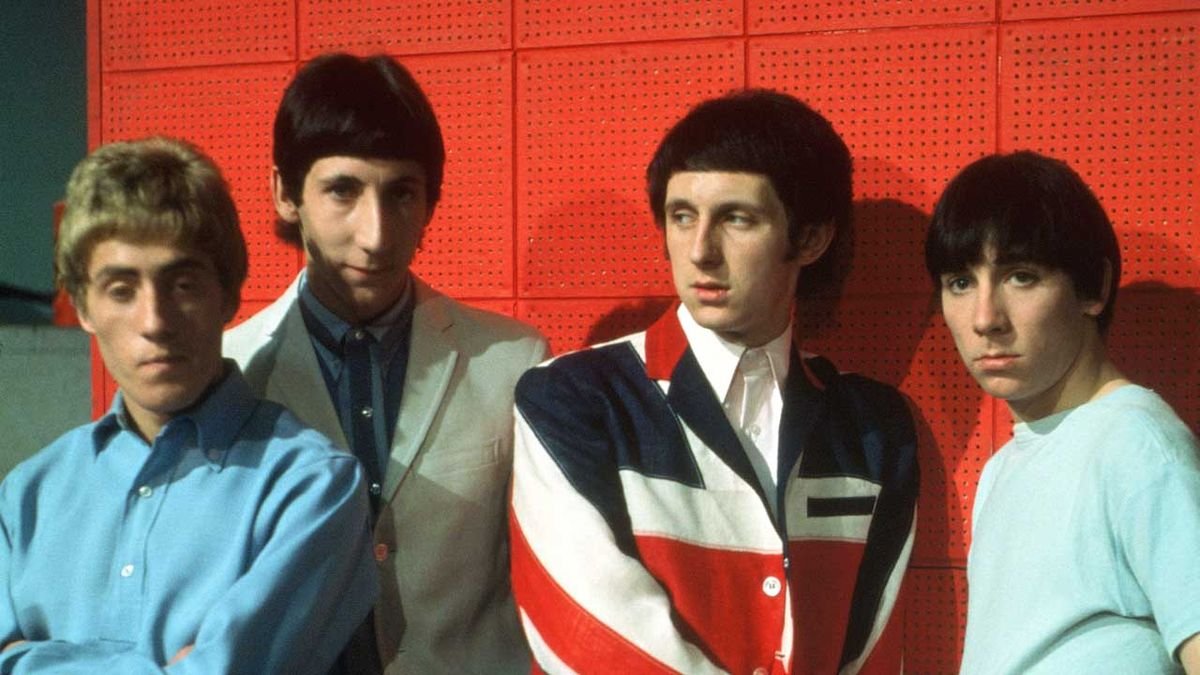
In the summertime of 1966 there used to be no higher position to revel in an evening of outright debauchery than at Lionel Bart’s space. The composer of the West Finish musicals Fings Ain’t Wot They Used T’Be and Oliver! lived in a mansion, nicknamed The A laugh Palace, in Fulham, West London.
Bart’s events had been well-known for his or her extravagance and the calibre of his visitors: Princess Margaret, The Beatles, Joan Collins and contributors of the Global Cup-winning England soccer squad had been a number of the visitors who drank and danced the night time away in 1966. Any individual so susceptible may additionally make just right use of the A laugh Palace’s many well-appointed bedrooms, assist themselves from a bowl of gear stored within the hallway, or discuss with Lionel’s secret sauna accessed by way of a dummy cloth wardrobe.
But even so composing West Finish musicals, Bart used to be a pop song buff who’d written hits for Tommy Steele and Cliff Richard. Thru his friendship with The Who’s managers Equipment Lambert and Chris Stamp, he’d additionally changed into a normal on every occasion The Who performed at London’s Marquee membership.
The Who in early 1966 had been loud, violent and uncompromising. However the composer of Oliver! would unknowingly assist Pete Townshend invent the rock opera.

That very same summer time, Townshend made a recording that modified The Who’s fortunes perpetually. He and his pal, song critic Ray Tolliday, created a comic story birthday provide for Equipment Lambert in Townshend’s studio. It used to be a recording of a 10-minute Gilbert And Sullivan-style opera titled Free of charge Amatis (Latin for ‘unfastened love’). It used to be devoted to Lambert and Lionel Bart.
Each males had been enthusiastically gay at a time when it used to be nonetheless unlawful in Britain. “Lionel used to be placing round The Who as a result of he appreciated the men within the target market,” Townshend stated in 2014. “Most of the mod boys – even if they wouldn’t admit it – had been seeking to be homosexual. It used to be regarded as radical to take medicine, pay attention to R&B, dance by yourself after which perhaps cross and shag Lionel Bart.”
Townshend recalled his first strive at opera: “The outlet line went: ‘Free of charge amatis/I really like Lionel Bart-is.’” Its grand finale used to be sung via Townshend and Tolliday in Goon Display-style squeaky voices, and used to be intended to put across Lionel attaining orgasm: “It went: ‘He’s coming, he’s coming, he’s coming… He’s c-o-m-e’ – breathe out,” stated Townshend.
Pete introduced Equipment together with his birthday provide. However he didn’t giggle. As a substitute Lambert took Townshend for lunch. “He stated: ‘That is nice, those joined-up items of song, developing an opera the use of pop song.’” Lambert advised Townshend to do one thing equivalent with The Who.
Free of charge Amatis marked the beginning of The Who’s first foray into rock opera, 1966’s A Fast One, Whilst He’s Away. However there have been a number of detours alongside the best way.

To the out of doors global, The Who seemed untouchable. They’d simply had their fourth Best 10 hit, Replace. However at the back of the scenes they had been deeply in debt, and embroiled in a felony dispute with their first manufacturer, Shel Talmy. Relationships inside the band had been similarly messy. Drummer Keith Moon used to be taking such a lot of medicine he couldn’t consider recording Replace, and vocalist Roger Daltrey used to be threatening to surrender as a result of he used to be ill of his bandmates taking medicine.
The Who’s conflicted nature used to be by no means extra obvious than in 1966. In March the band seemed at the duvet of the Observer color complement; a significant accolade for a pop team on the time. Photographer Colin Jones took the quilt photograph in a Manchester lodge room. However the accompanying article failed to say that The Who had been expelled from the lodge after Daltrey fired a shotgun out of the window. Or that at the in a single day teach again to London, Moon chased Townshend throughout the sleeper carriage whilst brandishing a knife. “I don’t assume I’d ever met a band who had been so adverse in opposition to every different,” the photographer marvelled.
Equipment Lambert knew The Who’s adverse symbol used to be nice for trade, however he additionally believed they had been able to a lot more. Equipment used to be the son of Consistent Lambert, the past due composer and director of the Royal Ballet. Once he began co-managing The Who, Lambert separated Townshend from the others and moved him into his flat in Belgravia. He presented the guitarist to the works of classical composers William Walton, Verdi and Purcell, and took him to the Royal Opera Space.
“Opera as we realize it is really defunct,” Lambert declared. “One wishes an absolutely recent way.” Equipment feared that The Beatles would quickly degree an opera if The Who didn’t get there first.
“Roger and I nonetheless felt tied to the bluff, difficult sound we had advanced in The Who’s gigs,” stated Townshend. “However I used to be changing into obsessive about the larger concept: may I write an actual opera?”
Egged on via Lambert, Townshend’s first strive after Free of charge Amatis used to be Quads, a tale set sooner or later the place folks can make a selection the intercourse in their offspring. A pair who request 4 daughters are given 3 daughters and a son as an alternative. But if Townshend wanted any other Who unmarried, he became Quads into I’m A Boy.
Roger Daltrey changed into the voice of the unwitting transvestite, Invoice, compelled via his folks to put on a get dressed and a wig. “To start with I didn’t understand how to sing it,” Daltrey stated. “Then I realised I needed to grow to be the nature of the boy.” Launched in August ’66, I’m A Boy peaked at No.2 in the United Kingdom, and inspired Townshend to make any other strive at “an actual opera”.
It used to be controversial, despite the fact that, whether or not it will be written for The Who. No person used to be certain if the crowd can be round for much longer. In Might, a upset Daltrey had surrender for a fortnight, forcing them to accomplish as a trio. Seventeen-year-old Robert Plant noticed the three-man Who at Kidderminster The city Corridor, felt sorry for them and presented his services and products. Townshend declined.
In the similar month, Keith Moon attended a clandestine jam consultation with The Yardbirds’ guitarists Jeff Beck and Jimmy Web page. The outcome used to be the fiery instrumental Beck’s Bolero, and rumours of a brand new team. Even John Entwistle, The Who’s stoic bass participant, regarded as becoming a member of the Moody Blues, or throwing in his lot with Moon and Web page.
When Townshend hit a drunken Moon together with his guitar after a shambolic gig at Newbury’s Ricky Tick membership in Might, the drummer walked out, taking Entwistle with him. “We sat in numerous nightclubs and deliberate our careers,” stated Entwistle. “I continuously surprise what would have took place if [Moon and I] had long past away and shaped Led Zeppelin.”
In the end, The Who’s gravitational pull used to be too sturdy. Each drifted again – and waited for Townshend to inform them what to do subsequent.
Townshend had large plans. He’d rented a Bechstein piano from Harrods and used to be composing an opera titled Rael, a futuristic myth by which Communist China invades Israel and, later, the remainder of the arena. “It used to be an audacious piece,” he stated, “and used to be intended to be a two-and-a-half-hour epic.”

Townshend used to be now dwelling in a top-floor flat in Wardour Side road within the center of what Time mag had lately known as “London: The Swinging Town”. A few of the British artefacts depicted at the duvet of Time’s ‘Swinging London’ factor used to be a Who T-shirt. The object within used to be a gushing love letter to a spot the place “everybody events with everybody else”. The Who, particularly Townshend, epitomised this thrilling new global.
At first of the yr, Townshend had seemed at the popular culture TV display A Entire Scene Going, and grow to be pals with its co-host, Personal Eye cartoonist and songwriter Barry Fantoni.
“Pete used to be an overly vibrant, pushed younger guy,” says Fantoni. “The sector of the humanities used to be like a chevron again then. And the spearhead used to be pop song. The whole thing else within the arts adopted at the back of.”
Being on TV and placing out with a pop famous person intended get right of entry to to the most productive puts and probably the most attention-grabbing other people. One night time it used to be all again to Marianne Faithfull’s with Paul McCartney and Mick Jagger; the following eating at a cafe within the King’s Highway the place the meals used to be dreadful however Michael Caine used to be on the subsequent desk. “There’d be some of these other people out of doors, pressed to the glass, seeking to get in,” says Fantoni. “Whenever you’d been on television tube and had been a celeb, it’s essential get the rest.”
Fantoni regarded as Townshend “extra attention-grabbing than Paul McCartney”, however when put next the remainder of The Who to “soccer avid gamers that sang”. There used to be a visual distance growing between Townshend and his bandmates, compounded via the truth that, as their major songwriter, he used to be incomes extra money.
Guests to his Soho eyrie spotted an conceited streak that had grown along side his stardom. In the future, Townshend grabbed the huge stone planter he used as a waste-bin, opened the window and tipped its foul contents onto Wardour Side road underneath. One night time, he intentionally tore up a £5 observe in entrance of certainly one of his penniless outdated art-student pals. Townshend would possibly were the crown prince of Swinging London however, as he later wrote in his memoir Who I Am, “I had grow to be disaffected… depressed and paranoid”.
In July, Lambert and Stamp settled out of courtroom with Shel Talmy. The Who had been unfastened to document with whomever they needed. However for the following 5 years Talmy would take a five-per-cent royalty on their recordings. They had been beneath much more power to stay having hits and getting cash.
The Bechstein went again to Harrods, and Rael the rock opera used to be placed on dangle. A closely abridged model would later seem on 1967’s The Who Promote Out. As a substitute, the crowd dashed into London’s IBC Studios to document a brand new unmarried, Glad Jack, a music about an eccentric who lived at the seashore at the Isle of Guy. It used to be a long way got rid of from stories of enforced cross-dressing and Communist China.
Co-manager Chris Stamp had lower a maintain The Who’s publishers, wherein Daltrey, Entwistle and Moon won advances of £500 every for writing two songs at the Who’s subsequent album. But even so the monetary rewards, it used to be just right for band morale.
The Who’s 2nd album, A Fast One, used to be recorded between September and November 1966. Townshend to begin with contributed Don’t Glance Away, Run Run Run and the power-pop anthem So Unhappy About Us. Entwistle presented Whiskey Guy and Boris The Spider. Moon delivered I Want You and a marching-band instrumental, Cobwebs And Peculiar. Daltrey controlled handiest the Good friend Holly-inspired See My Approach.
“The ambience within the studio used to be certainly one of strange, intensely chaotic creativity,” recalled Chris Stamp. Keith Moon’s creativity prolonged to adorning the sculptured cherubs surrounding the studio fireside with hand-drawn penises. The studio caretaker threatened them with expulsion, however couldn’t end up Moon used to be the wrongdoer.
But even so, The Who had larger issues to fret about. Even when they’d lower a model of Martha And The Vandellas’ Warmth Wave, there used to be nonetheless greater than 10 mins at the album to be stuffed.
Lambert visited Townshend and pleaded for extra subject material. With a closing date looming, Townshend had the motivation he wanted and in spite of everything wrote his first ‘rock opera’. A Fast One, Whilst He’s Away contained six “joined-up items of song” with a theme of what Stamp described as “love, betrayal and forgiveness.”
In reality, A Fast One used to be an unsettling tale a few younger lady deserted via her lover and seduced via ‘Ivor, an outdated engine motive force’. When her boyfriend returns she admits her infidelity and begs for forgiveness. Musically it meshed in combination The Who’s R&B influences with music-hall humour and early psychedelia. However its lyrics, about predatory, inter-generational intercourse published extra in regards to the “disaffected, depressed and paranoid” Pete Townshend than he realised.
Elderly six and together with his folks’ marriage in bother, Townshend have been despatched to are living together with his grandmother, Denny, in Westcliff-on-Sea, Kent. After Townshend’s 2003 arrest for viewing on-line kid pornography, he published that Denny had psychologically abused him and that he would possibly were sexually abused via certainly one of her boyfriends. After his folks had been reconciled, Townshend returned to London to are living with them, and not published what had took place to him.
A Fast One, Whilst He’s Away used to be, he admitted later, “a semi-autobiographical piece about kid abuse”. However he didn’t know that once he wrote it. Studying the lyrics now, it’s exhausting to know how he didn’t make the relationship.
In Who I Am, Townshend defined how its other actions associated with real-life occasions. Her Guy’s Long gone used to be about being despatched away via his folks; The Crying The city used to be the younger Pete sobbing for his absent dad and mom; Ivor The Engine Driving force used to be an amalgam of the bus drivers who labored reverse Denny’s flat, certainly one of whom can have been his abuser; and You Are Forgiven used to be encouraged via his mom coming to ‘rescue’ him. In 2014, The Who revived A Fast One Whilst He’s Away for his or her fiftieth anniversary excursion. Its finale noticed Townshend thrashing his guitar and roaring its remaining lyric, ‘You might be forgiven’, as though he used to be nonetheless exorcising some demons.
But if A Fast One seemed in December 1966, its secrets and techniques had been nicely hidden. As a substitute, its duvet representation, via long term Yellow Submarine artist Alan Aldridge, embodied the daring colors and blurred traces of Swinging London. As Chris Stamp later identified, A Fast One gave the impression to scream: “Mary Quant, Biba, Kings Highway and Carnaby Side road!”
The album changed into a Best 5 UK hit. Higher nonetheless, its 10-minute mini-opera proved The Who had been pondering past the confines of the pop unmarried. Paul McCartney instructed Townshend how a lot he cherished the name observe and that it used to be “precisely any such factor” The Beatles had been running in opposition to.
The Who’s 1966 used to be a turning level. 3 years later they’d free up their full-blown rock opera Tommy, and changed into one of the vital greatest bands on the planet. Free of charge Amatis and the sound of Lionel Bart ‘coming’ had paid larger dividends than Pete Townshend may be able to have imagined. With Tommy, The Who would input the Nineteen Seventies and a a laugh palace of their very own. Unfortunately no longer they all would make it out alive.
This option at the beginning seemed in Vintage Rock 220, revealed in January 2016.