Ask a track fan about their favorite live performance and chances are high that they’ll wax lyrical concerning the band’s efficiency, the ambience of the group and the near-perfect setlist. Then again, ask them concerning the sound high quality and the loudness of the live performance, and so they’ll most likely combat to search out the appropriate phrases to explain it. That is comprehensible, as sound could be a advanced matter to talk about.
Whilst I do not be expecting everybody to turn into professionals in psychoacoustics or advanced physics, working out sound terminology can really empower you. It will let you make knowledgeable selections about your are living track reviews or even offer protection to your ears. So, making an investment a while to be told the basics is without a doubt profitable.
My adventure on the earth of are living track began early, with my first punk band at 12 with my brother and my first process at 17, working sound at a neighborhood venue. As I grew older, my hobby for track handiest deepened, main me to a Bachelor’s level in Ingenious Sound Manufacturing and running in quite a lot of venues in Scotland.
I have had the privilege of working sound for a various vary of presentations, from bands similar to Don Broco to comedians like Alan Carr, or even opera, dance presentations and the strange pantomime right here and there. At the moment, I proportion my wisdom and reviews thru writing for Louder’s sister web page MusicRadar, masking the whole lot from putting in place PA techniques to reviewing standard music-making tools.
Nowadays, I’m going to stroll you thru the whole lot you want to find out about loudness, from explaining decibels and sound power ranges to the caution indicators a live performance is getting too loud. So in case you are an avid gig-goer, you will want to learn on.
What’s a decibel?
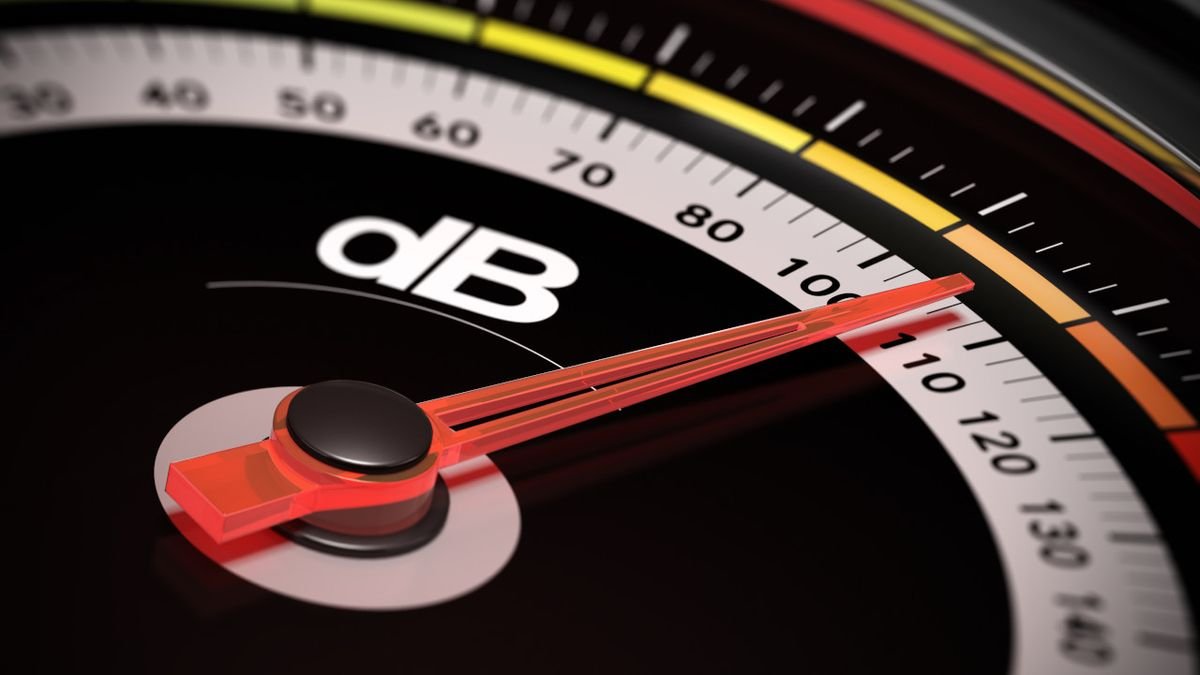
The decibel, steadily written as “dB” is a logarithmic unit used to measure sound point, with 0 being the quietest sound perceived through the human ear. It’s most probably no longer necessary to grasp the precise clinical explanation why at the back of the dimensions, however somewhat, how the dimensions pertains to not unusual on a regular basis sounds.
Very principally, the decibel scale will increase in components of 10 – and extra importantly, as you ascend the dimensions, the “perceived loudness” is doubled.
As an example, let’s check out the ground finish of the dimensions. A legitimate at 20 dB isn’t just a bit louder than a valid at 0 dB, it is a whopping 100 occasions extra intense. However on your ears, it might appear 4 occasions as loud, which is rather an important distinction. And if we move slightly upper to 30 dB, we are speaking a few sound that is 1,000 occasions extra intense than a valid at 0 dB, and it might be perceived as 8 occasions as loud.
When is loud too loud?
Underneath is a chart from Tinnitus UK that presentations not unusual on a regular basis sounds and the corresponding dB point – on the a ways right-hand facet of the desk, you’ll see how lengthy it’s protected to be within the presence of a valid at a definite quantity prior to it begins to do irreversible harm on your ears.

As you’ll be able to see, a are living rock band is available in at round 115dB, which is ready as loud as status subsequent to an ambulance siren. Nowhere close to as loud as Dave Grohl and Foo Opponents, who reportedly performed so loud they registered earthquake-level vibrations, in Auckland, New Zealand again in 2011!
A legitimate at this quantity will have to handiest be tolerated for 28 seconds, in order that’s why we at all times suggest a just right set of earplugs. No person desires to visit a live performance for handiest part a minute – smartly, possibly it used to be Cliff Richard…
If you want some recommendation surrounding plugs, ensure that to take a look at our information to the easiest earplugs for concert events, the place we have now units for all budgets that have been examined through track lovers and musicians.
What occurs should you don’t take care of your ears?
The most typical grievance amongst gig-goers and musicians is tinnitus, a situation characterized through the belief of noise or ringing within the ears when no exterior sound is provide. This situation may also be very tough to are living with, particularly at evening or in quiet eventualities.
I’ve tinnitus in my left ear, brought about through an enthusiastic drummer and his piercing use of a China cymbal. There is not any treatment for the situation; after you have it, you may have it for lifestyles. Thankfully, you’ll be able to forestall it from getting worse.
I by no means attend a gig with out my custom-moulded earplugs, and I even put on them in loud bars and golf equipment. My tinnitus could also be reasonably gentle in comparison to lots of my pals and co-workers, however it used to be a warning call for me to take my listening to severely. So should you’re a standard gig-goer, I counsel you get a suite of earplugs and take care of your listening to.

How can I cut back the probabilities of getting tinnitus?
Whilst there is no treatment for tinnitus, there are steps you’ll be able to take to minimise the danger and stay your listening to well being in take a look at. I have already discussed the significance of dressed in earplugs in a are living track atmosphere, however what else are you able to do to minimise the probabilities of getting tinnitus?
The American Tinnitus Affiliation has revealed a number of pointers of forestalling noise-induced tinnitus:
- Prohibit noise publicity
- Stay the quantity down to your headphones or earbuds
- Obtain a decibel reader app to measure sound ranges
- Use listening to coverage in noisy environments
- Take noise breaks
- Have a balanced vitamin
- Have your listening to checked steadily through an audiologist
I’m going to give the last word to Steel Hammer editor Eleanor Goodman, who is suffered from tinnitus since she used to be 16 years outdated.
Eleanor says: “In the end, one of the simplest ways to offer protection to your self from tinnitus is through dressed in earplugs. For the ones folks who’ve it (hi Lars Ulrich, Myles Kennedy, Brian Johnson and all of the leisure), I’m hopeful that analysis will result in new techniques of tackling it – and perhaps even a treatment.”