 I’ve not too long ago come throughout two outstanding sources for any of you who’re, like me, fascinated [perhaps to the point of obsession] through the early historical past of rock-and-roll.
The primary is the podcast “A Historical past of Rock Tune in 500 Songs,” [available at the usual spots, and here] produced through Andrew Hickey. It is simply what it says it’s, and it is beautiful astonishing. Each and every episode tells the tale of 1 tune in wonderful element, with a focal point on (a) the manufacturing: how the tune was once written, how/why/the place it was once recorded, who the backing musicians have been and the way they were given there, how they made up our minds so as to add horns or further vocals or no matter, and many others. and many others.—and (b) the song trade: who owned the publishing rights and the way they were given them, who owned the masters and what they did with them, who made up our minds which tracks went on which albums or on 45s (consider 45s?), who were given the songwriting credit and why …
The man has accomplished an improbable quantity of study, and he tells a perfect tale. I to find it spell binding (regardless that Hickey’s narrating voice takes somewhat being used to). It is undoubtedly now not for everybody; the episodes are beautiful considerable in period (an hour or from time to time just a little extra), they usually include greater than the general public almost certainly need to learn about, say, how George Martin ended up generating the Beatles as a result of his boss sought after to punish him for being this sort of ache within the ass (and for having an affair along with his secretary), or how Ike Everly, via his contacts on the barber store that he owned and operated, helped his sons Phil and Don get their first recording contract, or why Dylan did not use The Band to again him on Blonde on Blonde, or how Pal Holly ended up on that plane as a result of his supervisor had stolen the entire cash The Crickets had earned**, or how The Mob (now not a band—the true Mob) managed large swaths of the song trade—the golf equipment, the song publishers and recording corporations, the musicians’ unions, and many others.—in NYC within the ’50s and ’60s. And so on. and many others.
**One of the most many, many stuff concerning the song business that I’ve realized from Hickey is that musicians did not should be black to get ripped off through the “fits,” who have been undoubtedly equal-opportunity crooks and shysters.
However in case you love this song and need to be informed a shitload of belongings you by no means knew about the way it got here to be, I extremely counsel it. If you wish to give it a check out, my recommendation is to pick out a tune you are specifically keen on—he is reached #174, transferring chronologically from the beginnings within the past due ’30s via 1969 up to now.– and pay attention to what he has to mention about it; that are supposed to come up with a excellent sense of whether or not it is your more or less factor.
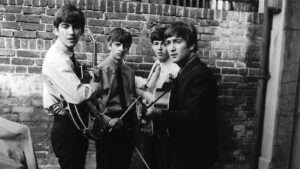
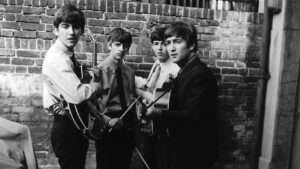
The second one is one thing I picked up on Hickey’s advice (in Episode 100 on “Love Me Do,” the Beatles’ first Parlophone unmarried from 1962, which I specifically counsel): Mark Lewisohn’s magnificent and good biography of the Beatles, “Music In.” This primary (of a projected 3 volumes) covers, in 960+ pages (!), the years from their childhoods as much as the tip of 1962 and the approaching unencumber in their 2d Parlophone unmarried, “Please Please Me,” which might change into the primary of 32 (!) #1 hits they launched over the following 7 years.
I’ve lengthy concept that no biography might be able to contact Robert Caro’s magnificent multi-volume set on LBJ, however Lewisohn comes very shut—an encyclopedic and extremely engrossing social historical past of existence in Liverpool (and the United Kingdom on the whole) within the speedy post-WWII years, with actual perception into the abnormal mixture of dumb good fortune, sheer brilliance, fearlessness, toughness, love, self-confidence, and single-mindedness of goal, that enabled 4 teenage working-class faculty dropouts—from, of all puts, Liverpool, a town within the throes of a horrible decline attributable to the dual shocks of Britain’s de-industrialization and the ferocious pounding it took from the Germans—have been in a position to turn into the worldwide leisure business and world tradition.
In his Advent, Lewisohn confronts the most obvious query: can we in point of fact want 900+ pages and 400,000 phrases concerning the early years of what was once, in the end, only a rock-and-roll band, even person who was once a particularly terrific and influential one? Here is what he wrote; I feel it is the most productive factor I have ever examine simply how particular the Beatles have been:
“Each and every every so often, existence evokes a real final. It may be mentioned with out worry of hyperbole, that is what the Beatles have been and are. And [sixty]-plus years once they leapt into view—[sixty!]—there may be little trace it is going to alternate. Such a lot of would-be successors have come and long past, there may be now an acceptance that nobody will also be larger or higher. John Winston Lennon, James Paul McCartney, George Harrison, and Richard Starkey cling on sturdy, universally stated as a cultural drive, nonetheless one way or the other present and woven into the material of recent lives. John, Paul, George, and Ringo—the 4 Liverpool lads who pumped the guts of a decade that still may not close up, the Sixties.
If it was once essential to “promote” the Beatles, you should level to many achievements, however their song underpins the whole thing. One game-changing album after any other, and one game-changing unmarried after any other, 2 hundred and fourteen tracks recorded in seven crowded years in a kaleidoscope of types. This song is understood, beloved, revered, mentioned, imitated, loved, and studied. It continues to encourage new artists and be reshaped impressively in each and every style. Its tune titles and phrases are tailored for headlines in twenty first century media, its quotes are enfolded in on a regular basis vocabulary and chanted in soccer stadiums. Infused with the Beatles’ power and personalities, this song nonetheless lifts the spirit and is handed joyfully from era to era. Obviously, one thing particular came about right here—however what? How?
Believe too how the Beatles many times married state of the art originality with immense mainstream recognition, when for nearly any person else those are mutually unique. And the way and why they ditched their successful concepts each and every time the sector raced to replicate them. Believe how they did the whole thing with down-to-earth humor, honesty, optimism, taste, air of secrecy, irreverence, intelligence, and a specifically spiky disdain for falseness. How they have been articulate, daring, curious, direct, instinctive, difficult, blunt, sharp, well mannered, impolite—prickers of pomposity, rule-breakers by no means cowed through conference. And imagine how they created a profound and sustained connection to their public, and the way they resisted branding, industrial sponsorship, and company association and hype. The Beatles have been freed from artifice, and were not the made from marketplace analysis or center of attention teams or TV skill presentations. They have been unique, and advanced organically when everybody was once having a look the opposite direction. . . .
I have been looking forward to a e-book this sweeping tale calls for … person who explains how the society that formed the Beatles first won them after which was once formed through them, how John, Paul, George, and Ringo handled each and every different as pals and bandmates, how they so deftly treated the media and such exceptional famous person, how they remodeled the global song business and shook world adolescence tradition conscious, and the way they prompted a revolution in how other folks pay attention to and play song. The Beatles did not invent the electrical guitar, and were not the primary guitar staff—however each and every rock band since 1963 is pleasing their legacy ….”
As with the Hickey podcast, it isn’t for everybody. However the Lewisohn e-book sweeps a lot more widely Hickey’s podcast, and I do not believe you must be reasonably the similar more or less rock-and-roll obsessive to revel in it and to be told a huge quantity about what the sector was once like in the course of the final century.