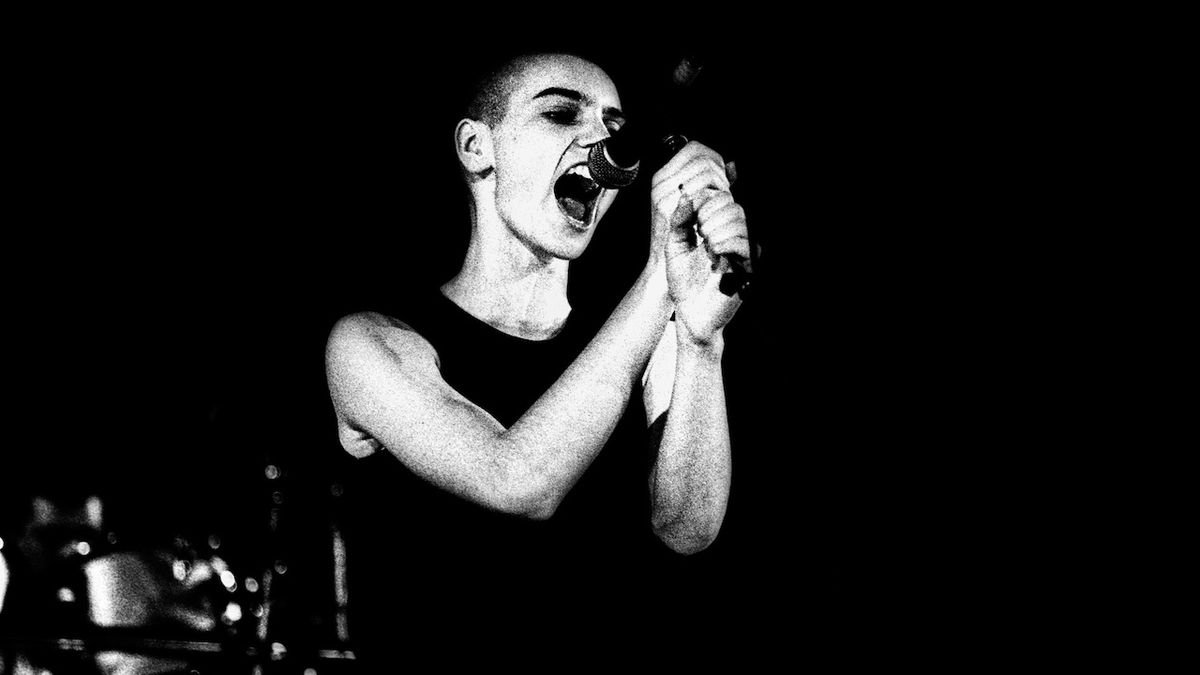
Within the spring of 1988, as Sinéad O’Connor’s debut album The Lion and the Cobra climbed into the Best 40 of the Billboard 200 chart, the singer’s US document corporate, Chrysalis, felt that celebrations had been so as. Nigel Grainge, the landlord of O’Connor’s UK label Ensign, had informed Chrysalis’ president that he will have to be expecting one thing within the area of 25,000 gross sales for the document in The usa however, in simply six months, it had already handed the 200,000 gross sales mark, no imply feat for an a set in large part left out by means of radio.
In reputation of the truth that an increasing number of folks had been changing into enthusiasts of the younger Irish singer, some vivid spark in Chrysalis’ promotions and advertising department, determined it could be a hilarious gimmick to ship radio stations and tune magazines promo postcards that includes doctored photographs of celebrities with none hair, and to ship out a photograph of document label group of workers dressed in (white) skin-coloured cranium caps for e-newsletter in tune trade mag Billboard. O’Connor wasn’t amused.
“It makes me assume that my document corporate are assholes,” she informed a journalist, revealing that she went into the label’s place of job afterwards and “went fucking mad.”
When the tale was once recounted in Musician mag in June ’88, Nigel Grainge expressed sympathy along with his pals at the United States label.
“She’s no longer the perfect particular person to get along side,” he informed the mag, including, as though this had been a detrimental persona trait, “She’s very a lot her personal particular person.”
That remark mentioned much more about Grainge than O’Connor. In the similar interview, the label boss admitted that he and the singer “had fairly numerous disagreements over her getting pregnant” ahead of the discharge of the album, which had resulted in “numerous non-public acrimony.” What he did not point out, however O’Connor later did, each in her 2021 memoir Rememberings, and in Not anything Compares, Irish film-maker Kathryn Ferguson 2022’s documentary movie about her profession, was once that he had phoned a physician to “galvanize upon her” that, for the sake of her profession, it could be best possible for her and everybody else if she had an abortion.
“Your document corporate has spent £100,000 recording your album,” the singer recalled the physician telling her. “You owe it to them to not have this child.”
Despite the fact that this dialogue wasn’t disclosed in 1988, in his interview with Musician mag, Grainge did publicly specific his ‘considerations’ in regards to the singer’s talent to follow-up the good fortune of her debut document.
“Presently her lifestyles isn’t her personal,” he mentioned. “If she is going right into a apprehensive state of affairs the place she will’t make it [a second LP] occur, there may well be issues.”

Watch On
Amid the world-wide outpouring of grief and elegiac tributes which adopted within the wake of O’Connor’s loss of life, elderly 56, on July 26 closing yr, one stood out, each for its obtrusive sincerity, and for the uncomfortable truths it contained.
“There’s a positive tune trade hatred for singers who don’t ‘have compatibility in’… and they’re by no means praised till loss of life – when, after all, they may be able to’t solution again,” Morrissey, former frontman with The Smiths, wrote. “She was once a problem, and she or he couldn’t be boxed-up, and she or he had the braveness to talk when everybody else stayed safely silent. She was once confused merely for being herself. Her eyes after all closed on the lookout for a soul she may name her personal.”
When O’Connor delivered the tapes of her 2d album, I Do Now not Need What I Have not Were given, to her document label(s), there was once standard dismay. The singer was once informed that the songs had been “too non-public”, too introspective, too imbued with ache… and that in the event that they had been to liberate it, it could be “an entire flop.”
“They mentioned folks wouldn’t realize it and it wouldn’t be a good fortune and it could take a seat within the warehouse,” the singer informed Musician mag in August 1990. “And I knew that they had been fallacious, and I informed them on the time that they had been fallacious.”
They had been very, very fallacious. In the second one week of January 1990, O’Connor presented her 2d album, and a brand new decade, with a sensational, superlative model of Prince’s Not anything Compares 2 U, at the start an unheralded deep reduce on his band The Circle of relatives’s sole studio album, launched in 1985. Recuperating from a break-up, O’Connor made the music her personal – crying actual tears within the video – and the area felt her ache: the music spent 4 weeks on the best of the United Kingdom and US singles charts, and went directly to promote 3.5 million copies ahead of the yr was once out. When the singer met the music’s author, Prince congratulated her on her good fortune, however informed her off for her repeated swearing in interviews.
“I don’t give you the results you want,” O’Connor answered. “For those who don’t love it, you’ll fuck your self.”
Listening to I Do Now not Need What I Have not Were given for the primary time, it was once inconceivable to not be moved, certainly awed, by means of O’Connor’s personal uncooked, emotional and unfiltered songwriting. Opening with a solemn recital of The Serenity Prayer (“God, grant me the serenity to simply accept the issues I will not alternate, the braveness to modify the issues I will be able to, and the knowledge to grasp the adaptation”), the album in large part offers with heartbreak, betrayal and ache – O’Connor laying herself naked in quietly devastating lyrics reminiscent of “I do know you do not love me anymore. You used to carry my hand when the aircraft took off”, on The Closing Day Of Our Acquaintance. However there’s spirit and defiance operating all through the 10 songs too, and quiet fury now and then, no longer least when the singer the spotlights the institutionalised racism of the London’s Metropolitan Police and the hateful nature of Margaret Thatcher’s govt on Black Boys On Mopeds.
Tucked away within the 3rd verse of The Emperor’s New Garments is a lyric which reduce proper to the guts of O’Connor’s artwork and humanity, a undertaking remark the singer would by no means deviate from.
“No matter it will deliver, I can are living by means of my very own insurance policies,” she sings. “I can sleep with a transparent moral sense, I can sleep in peace.”
From the instant she hit the promotional path for the document, O’Connor pulled no punches. She denounced sexism within the tune trade and media, attacked corruption and criminal activity within the Catholic Church, expressed an working out for the IRA’s armed fight within the North of Eire, and refused to bend the knee ahead of someone, without reference to their standing or superstar. And when she tore up a photograph of the Pope on Saturday Evening Are living, and refused to allow an airing of the American nationwide anthem forward of a gig in New Jersey, the area’s conservative media set upon her like wolves.
Thru all of it, O’Connor remained defiant and unbowed, however the controversies and the sheer vitriol of the savaging she won inevitably took a toll upon her psychological well being. How may it no longer? For the remainder of her profession, without reference to the startling high quality of the tune she produced, the singer was once labelled tricky, erratic, risky, bothered… and her personal worst enemy.
Ahead of her passing, O’Connor was once running upon a brand new document with Belfast DJ, manufacturer and composer David Holmes, who had presented himself to the singer in 2018 at Pogues frontman Shane MacGowan’s sixtieth birthday live performance. Holmes was once a fan, however past that, he listened to and noticed O’Connor, the place such a lot of did not, and the pair become pals in addition to tune collaborators.
Talking in The Father or mother, simply days after O’Connor’s passing, Holmes was once brutally truthful in regards to the remedy meted out to his pal from the instant she entered the limelight.
“Moderately than being nurtured and helped, she was once laughed at and vilified,” he mentioned. “The entire thing is so bloody medieval. Sinéad was once hung, drawn and quartered. The remedy that she has won over time it’s fairly merely appalling.”
In her 1990 Musician mag duvet function, carried out simply months after the discharge of her 2d album, O’Connor admitted that the good fortune she was once beginning to reach was once already placing “monumental force” on her.
“I haven’t any drawback with opening up my veins with a purpose to create, with a purpose to write songs,” she insisted. “What I to find very tricky to handle is the peripheral issues, the entire business good fortune, the entire status side of it. Other people hassling me, following me. None of it has the rest to do with me as an individual or an artist, it’s were given not anything to do with what any of the songs are about.”
In the similar interview, she made a remark which spoke volumes about her solution to her artwork, revealing that she knew how her honesty and fearlessness could be won.
“The arena is stuffed with cowards,” she declared. “You spot cowards so much whilst you’re doing one thing that’s truthful, since you remind folks of their very own dishonesty.”
“I’m very, very flattered that folks like me,” she added. “That’s nice. And if I’m doing one thing to assist them, good – lifestyles is an excellent factor. However it’s simply an excessive amount of… If I will be able to’t do it as an actual particular person, there’s no level.”