
This enigma has perplexed nice minds because the days of the lyre. Plato used to be made up our minds to weed out unhealthy vibrations. In historic Greece, bursts of experimentation had given upward thrust to musical scales, or modes, named for neighbouring peoples: Ionian, Dorian, Phrygian, Lydian, Aeolian.

No longer keen on the Lydian mode: used to be Plato the primary song critic? iStockphoto
To Plato, they will have to have sounded just like the Thong Tune. In his Republic, he banned the Lydian mode for encouraging drunkenness and located fault with many of the others. Best the Dorian, dignified and “with out frills”, and the Phrygian, an invaluable stimulant for struggle, belonged in his utopian city-state.
Tune as a ‘nerve tonic’
Now we fast-forward to the Enlightenment, when handwringing over the “flawed” songs received clinical gloss. Taking cues from René Descartes’ mind-body divide, 17-century scientists described physique portions in mechanical phrases.
Nerves turned into fluids, writes James Kennaway, a historian of medication at Durham College, England. Tune used to be a direct-acting “nerve tonic”. In the fitting doses, it used to be wholesome. However in sufferers with sicknesses corresponding to “inflammatory fever”, cautioned a doctor who hobnobbed with the Mozart circle of relatives, song may have “destructive penalties”.
Rising fears about song coincided with booming piano gross sales and a mushrooming center magnificence. In 1824, a wellness e-book known as The Circle of relatives Oracle of Well being underlined “the unhealthy results of song at the nerves” and claimed a unmarried efficiency of a Rossini opera had led to “greater than 40 instances of mind fever, or violent convulsions”. Tune wanted a caution label.
The “danger” implemented particularly to the gentler intercourse, however girls of the day loved dwelling at the edge. Taking note of the Hungarian virtuoso Franz Liszt tickling the ivories used to be mentioned to reason suits of delirium. However identical to Beatlemania a century later, raving at a Liszt live performance had social cachet. “So fervid used to be female admiration,” wrote the song historian Percy Scholes, that if Liszt dropped his handkerchief, “it used to be torn to items as ‘souvenirs’”. Women long gone wild, Victorian-style.
Lengthy sooner than the perception of “subliminal messages” in heavy-metal albums, Nineteenth-century composers toyed with a type of musical intellect keep watch over. Wagner used routine topics known as leitmotifs to jog the opera listener’s reminiscence of the whole lot from an enormous’s fortress to a dwarf’s curse on a hoop. He continuously embedded those musical alerts in tactics the informal listener would by no means come across.
Earlier than the 1865 debut of Tristan and Isolde, Wagner even speculated his newest opera would possibly power other folks insane. Mark Twain attended Tristan on the Bayreuth Competition in 1891, and reported feeling “just like the sane individual in a group of the mad”. (However in the similar breath, he described it as “one of the crucial ordinary stories of my existence”.)
Within the twentieth century, a brand new style of song reared its head, one so debauched it used to be mentioned to atrophy the mind. Underneath its “demoralising affect,” wrote song educator Anne Shaw Faulkner, listeners “are in fact incapable of distinguishing between nice and evil”.
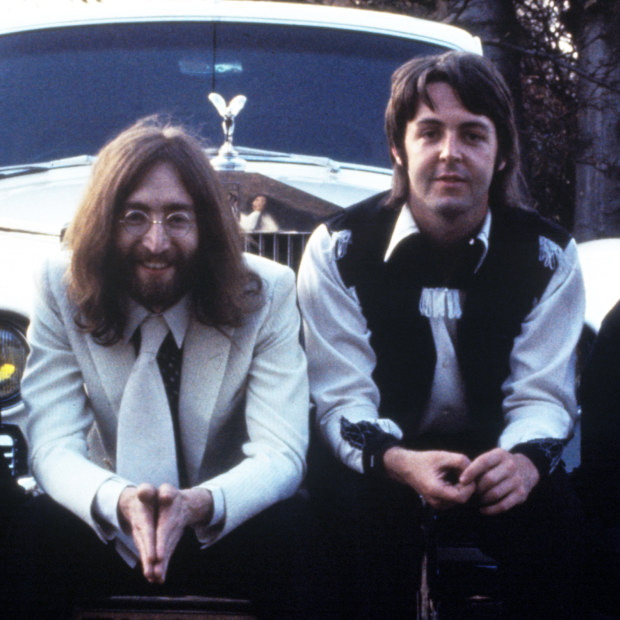
Beware: paying attention to the Fab 4 may “flip us into disciples of the Antichrist”, warned one US legislator about The Beatles.
Faulkner wasn’t speaking about demise metallic or profanity-laden rap. Writing within the Girls’ House Magazine, she used to be describing jazz.
Her alarmist screed, printed in 1921, used to be echoed 60 years later amid fears about heavy metallic. A invoice put sooner than the California Meeting in 1982 claimed that albums by means of bands from The Beatles to Styx contained secret messages when performed backwards. Those “back-masked” messages, argued California legislator Phil Wyman, may “flip us into disciples of the Antichrist”.
Ethical panic grew so intense that former 2d Girl Tipper Gore introduced a marketing campaign to have “parental advisory” stickers added to song albums. Rock stars together with Dee Snider, lead singer of Twisted Sister, testified in US Senate hearings to protect their craft.
Gore’s pearl-clutching over Twisted Sister now turns out old fashioned. As of late’s demise metallic bands have names like Cannibal Corpse, Witch Vomit and Blood Incantation and scream strains about crushing other folks’s heads till the brains drip via. Hundreds of thousands of listeners international are attracted to songs that shriek about homicide, torture, infanticide and rape.
To higher perceive the appeal, Australian psychologists requested 48 demise metallic followers and 97 non-fans to hear songs on this vein. No longer unusually, song with violent topics left non-fans feeling “demanding, afraid, and indignant”.
For demise metallic followers, although, the similar songs had the other impact: devotees reported greater emotions of private energy, internal peace, and pleasure. One listener described demise metallic’s attraction as having “one thing to do with the primal scream in us. It’s a unlock, accepting and empowering.”
The psychologists concluded that demise metallic followers, like horror buffs, are in a position to split myth from fact. The surprising lyrics repel outsiders, reinforcing a way of shared id.
However for followers, demise metallic is “feel-good” song.
That is an edited extract from Stressed out for Tune: A Seek for Well being and Pleasure Throughout the Science of Sound by means of Adriana Barton (Greystone Books), $35.